The Open Road: The Global Journey of the Fourteenth Dalai Lama

Book Review


The Open Road: The Global Journey of the Fourteenth Dalai Lama, by Pico Iyer. One of the most acclaimed and perceptive observers of globalism and Buddhism now gives us the first serious consideration—for Buddhist and non-Buddhist alike—of the Fourteenth Dalai Lama’s work and ideas as a politician, scientist, and philosopher. Pico Iyer has been engaged in conversation with the Dalai Lama (a friend of his father’s) for the last three decades—an ongoing exploration of his message and its effectiveness. Now, in this insightful, impassioned book, Iyer captures the paradoxes of the Dalai Lama’s position: though he has brought the ideas of Tibet to world attention, Tibet itself is being remade as a Chinese province; though he was born in one of the remotest, least developed places on earth, he has become a champion of globalism and technology. He is a religious leader who warns against being needlessly distracted by religion; a Tibetan head of state who suggests that exile from Tibet can be an opportunity; an incarnation of a Tibetan god who stresses his everyday humanity.

Moving from Dharamsala, India—the seat of the Tibetan government-in-exile—to Lhasa, Tibet, to venues in the West, where the Dalai Lama’s pragmatism, rigor, and scholarship are sometimes lost on an audience yearning for mystical visions, The Open Road illuminates the hidden life, the transforming ideas, and the daily challenges of a global icon. Pico Iyer is the author of six works of nonfiction and two novels. He has covered the Tibetan question for Time, The New Yorker, The New York Times, The New York Review of Books, and many other publications for more than twenty years. Order from Amazon.com

Pet Memorials in Europe

by Kristin Gabriel

For centuries people from around the world have honored pets upon their death and buried their beloved friends in pet cremation urns or pet cemeteries, which are not new to history. In 1986 Laurence Stager's archaeological team discovered the ancient pet cemetery of Ascalon dating back to the period of Persian rule (539-332 B.C.) in Palestine. It contained the remains of over 1000 dogs.

The Le Cimetière des Chiens D'Asnières-Sur-Seine features a large sculpture with the carving of a Saint Bernard carrying a child. Barry the dog saved the lives of 40 people in the Alps before he lost his own life trying for the 41st time to rescue again. Another large tombstone--features a German Shepherd statue memorializing all police dogs who have died in action.

One pet cemetery in the United Kingdom at Brynford near Holywell in Flintshire, has won awards. For the third year in a row the pet cemetery won the distinguished award for the UK's best facility of its kind last year. The award was from the Memorial Awareness Board, an organization run by the National Association of Memorial Masons.

Brynford's owner John Ward and his wife started the cemetery in 1989, and since, more than 500 pets have been buried and or cremated there. This cemetery features a chapel, tea rooms, and a visitor center on seven and a half acres of landscaped gardens for the pet memorials. At services in the chapel a priest delivers a farewell prayer with dignity.

In America, Hartsdale Pet Cemetery and Crematory is America's oldest and most prestigious pet memorial and burial grounds. It was developed back in 1896, and by the end of the War there were more than 2,000 graves in this Westchester County, New York cemetery where pets are buried in pet urns, and pet caskets, with pet memorial markers. It all started when prominent New York City Veterinarian Dr. Samuel Johnson offered his apple orchard as a burial plot for a friend's dog. Today, there are more than 70,000 pets buried there, and many have custom pet memorial stones.

This state of the art pet crematory has a separate crematory office and offers a range of services including cremation, pet memorials, pet cremation urns and more. Plus since more than 7,000 military canines had served with such great distinction during the War, it as Hartsdale Canine Cemetery that was chosen as the location for a beautiful pet monument built for $2,500. The German shepherd status was designed by Walter A. Buttendorf and sculpted by a well known designer who was one of the builders of Grand Central Station in New York City, Robert Caterson.

Kristin Gabriel is a professional writer based in Los Angeles, CA who works with Peternity.com, a place where people honor their pets for eternity. Peternity provides custom products including pet memorial stones and grave markers, pet urns, garden statue pet memorials, pet memorial headstones, pet keepsake memorials, pet portraits, burial boxes, custom engraved glasswork, and other pet memorials. Call 877-PET-PEACE or go to www.peternity.com


AddThis Social Bookmark Button

Colorado Wind Power

Colorado News

Click on headline for full article
Austin Wind-Energy Company Moving to Colorado
"Austin's Renewable Energy Systems Americas Inc. is moving its headquarters to Broomfield, Colo., relocating 70 full-time employees. RES-Americas also said it plans to add 70 more employees at its new Broomfield site over the next year. Company officials said Broomfield is close to other RES-Americas operations, that Colorado's business and political climate supports renewable energy, and that the area enjoys a high quality of living."
Woodward Plans to Build Wind Turbine Inverters in Colorado
"Woodward Governor Co. plans to add up to 100 new jobs in Colorado through the expansion of its wind turbine inverter business, which will include a new production line in northern Colorado to support the growing demand for clean energy in the U.S. Inverters are used to convert a wind turbine's variable output into grid-compatible electrical power."
Who said renewable energy isn't good for the economy? It is certainly boosting the Colorado economy. Thank goodness we have some progressive thinking here. While many of us here in Chaffee County have been complaining about all the wind we've been having the last week or so, we might want to turn that thinking in a more positive direction. It would be nice to see some wind turbines around here generating clean renewable energy.

Civilization

Quotation of the Week

"Civilizations in decline are consistently characterised by a tendency towards standardization and uniformity." - Arnold Toynbee


Food Shortage, Money Problems, and Weather

Making Headlines

Click on headline for full article
Biofuels Boom Threatens Food Supply
"Growing use of such crops wheat and corn to make biofuels is putting world food supplies in peril, the head of Nestle, the world's biggest food and beverage company."
Daniel Pinchbeck Discusses the End of Money
Gulf Stream Leaves Its Signature Seven Miles High
"ScienceDaily (Mar. 24, 2008) — The Gulf Stream’s impact on climate is well known, keeping Iceland and Scotland comfortable in winter compared to the deep-freeze of Labrador at the same latitude. That cyclones tend to spawn over the Gulf Stream has also been known for some time. A new study reveals that the Gulf Stream anchors a precipitation band with upward motions and cloud formations that can reach 7 miles high and penetrate the upper troposphere. The discovery, announced by a Japan–US team of scientists, shows that the Gulf Stream has a pathway by which to directly affect weather and climate patterns over the whole Northern Hemisphere, and perhaps even world wide."

Coffee and Buffalo

Colorado News

Click on headline for full article
Dozens of bison shot to death in Colorado
"Case looks like ‘random shooting that’s completely egregious,’ expert says."
Starbucks Must Pay $100 million in Back Tips
"California judge rules supervisors can not take share of gratuities."
This recent buffalo slaughter in Colorado is reminiscent of the wholesale slaughter of buffalo in the 1800's for nothing more than "sport." Have we not evolved any since then?

Starbucks earned 672 million dollars in profit last year but they won't pay their supervisors living wages. They augment their pathetic supervisory pay by allowing the supervisors to take a substantial amount of the tips customers leave for the hourly wage baristas. While this landmark case involves only Starbucks employees in California it will soon affect us here in Salida. After all, there are, not one but two, Starbucks opening up in Salida this year. (One in the local Safeway and one in the local McDonalds.) Will local Salidans be very willing to tip their Starbucks baristas knowing that a significant portion of their tips doesn't go to those baristas but rather to the managers of those Starbucks? Will they be willing to pay top dollar for coffee and then tip on top of that knowing that Starbucks profits while both the employees and the managers are utterly dependent on tips to make a living? What's your opinion on this? Click the "comments" link to share your opinion.

Farewell, My Subaru: An Epic Adventure in Local Living

Book Review


Farewell, My Subaru: An Epic Adventure in Local Living, by Doug Fine. Like many Americans, Doug Fine enjoys his creature comforts, but he also knows full well they keep him addicted to oil. So he wonders: Is it possible to keep his Netflix and his car, his Wi-Fi and his subwoofers, and still reduce his carbon footprint? In an attempt to find out, Fine up and moves to a remote ranch in New Mexico, where he brazenly vows to grow his own food, use sunlight to power his world, and drive on restaurant grease. Never mind that he’s never raised so much as a chicken or a bean. Or that he has no mechanical or electrical skills.

Whether installing Japanese solar panels, defending the goats he found on Craigslist against coyotes, or co-opting waste oil from the local Chinese restaurant to try and fill the new “veggie oil” tank in his ROAT (short for Ridiculously Oversized American Truck), Fine’s extraordinary undertaking makes one thing clear: It ain’t easy being green. In fact, his journey uncovers a slew of surprising facts about alternative energy, organic and locally grown food, and climate change. Both a hilarious romp and an inspiring call to action, Farewell, My Subaru makes a profound statement about trading today’s instant gratifications for a deeper, more enduring kind of satisfaction. Order from Amazon.com

Colorado Snowfall Nearing Records

Colorado News

Click on headline for full article
Colorado On Flood Watch
"Lakewood - Super-sized snowpacks and forecasts for a warm spring have large parts of the state on flood watch. State snowpacks, at 126 percent of average, are their highest in a decade, with some regions like the Arkansas River Basin seeing the deepest snows in 40 years, according the National Resources Conservation Service."
Crested Butte Snowfall Nears Record
"Mt. Crested Butte, CO - Crested Butte Mountain Resort's (CBMR) ski season is on pace to break the resort's snowfall record, and resort officials are extending three weeks of half price skiing and riding to everyone with a season pass or card from any ski resort in the country. With more than 350 inches of snowfall by the beginning of March, CBMR is on track to top the existing record of 415 inches, recorded during the 1979-1980 winter season."
Closer to home, Monarch Mountain has already passed the 400 inch mark.

The American Dream

Quotation of the Week

"It is called the American Dream because you have to be asleep to believe it." - George Carlin

Oregon's Rogue River Celebrates 40 Years of Protection

by Joy Henkle

"It is hereby declared to be the policy of the United States that certain selected rivers of the Nation, with their immediate environments, possess outstandingly remarkable scenic, recreational, geologic, fish and wildlife, historic, cultural, or other similar values, shall be preserved in free flowing condition, and that they and their immediate environments shall be protected for the benefit and enjoyment of present and future generations." --Wild and Scenic Rivers Act

American attitudes toward wilderness underwent an important change over the course of the twentieth century. In the 1930s and 1940s, Aldo Leopold, Robert Marshall, and other well-known conservationists began to argue that not only were undeveloped areas of high ecological value, they were also of high social value since they provided an outlet for increasingly urbanized populations to renew their relationship with nature.

Aldo Leopold and Robert Marshall were born and died many years before the passage of the 1960s Wilderness Act but their influence on the formation of the Act's intent cannot be denied. Leopold is considered by many as the father of wildlife management and of the United State's wilderness system. He was a conservationist, forester, philosopher, educator, writer and outdoor enthusiast. Robert Marshall, like, Leopold, was a visionary in the truest sense of the word. He set an unprecedented standard for wilderness preservation in the United States that few have surpassed. His ideas and dreams continue to be realized long after his death at the young age of 38 in 1939. He was the principal founder of The Wilderness Society and was among the first to suggest that large tracts of Alaska be preserved, shaped the U.S. Forest Services' policy on wilderness designation and management, and wrote passionately on all aspects of conservation and preservation.

These efforts to revalue wilderness' worth to society eventually lead to the formation of two important pieces of federal legislation passed in the 1960s. Both the 1964 Wilderness Act and the 1968 Wild and Scenic Rivers Act are premised on the idea that wild places are ecologically and socially valuable and therefore worthy of protection from unchecked development. Unlike the Wilderness Act, however, the Wild and Scenic Rivers Act recognized that partially modified areas were also worthy of protection. It divided rivers and surrounding riparian lands into three categories--wild, scenic, and recreational--based on the degree of development.

Southwestern Oregon's Rogue River was one of eight rivers to be protected under the original 1968 Wild and Scenic Rivers Act. More than eighty-four miles from the mouth of the Applegate River downstream to the Lobster Creek Bridge are protected under the act, 33.6 miles of which are considered wild, 7.5 miles scenic, and 43.4 miles recreational. This incredible river's total flow is 215 miles from Crater Lake (the United State's deepest lake) to the Pacific Ocean.

Steelhead and salmon fisheries, challenging whitewater, and extraordinary wildlife viewing opportunities have made the Rogue a national treasure. Black bear, river otter, black-tail deer, bald eagles, osprey, Chinook salmon, great blue heron, water ouzel and Canada geese are common wildlife seen along the Rogue River. Popular activities include: white water rafting, fishing, and hiking.

The Wild section of the Rogue River is one of the most popular whitewater runs in the world. A steady water level due to dams upstream, hot sunny summer weather, and exciting whitewater rapids through lush forests and steep canyons heighten its popularity.

Due to its popularity, river managers have limited access to the Wild Section of the Rogue River in order to protect the river and the Wild Rogue Wilderness from overuse. Limiting the numbers of people on the river also enhances the Wilderness experience for floaters and hikers.

The last 40 years have afforded the Rogue River protection from development and misuse. The river today stands as a testament to the foresight of wilderness pioneers such as Marshall and Leopold and the legislation that was eventually crafted from their ideas and dreams. Marshall wrote just before his death, "To us the enjoyment of solitude, complete independence, and the beauty of undefiled panoramas is absolutely essential to happiness."


Joy Henkle has spent two decades as an outdoor writer for magazines, websites and, more recently, blogs. Over much of the last decade, her travel expertise has been focused on Oregon's unique and diverse Rogue River region. Visit her at Whitewater Warehouse orWhitewater Rafting Blog.

Pink Poodles, Turtles, and Vandalism

Colorado News

Click on headline for full article
Colorado Woman Faces $1,000 Fine for Dyeing Poodle Pink to Raise Awareness for Breast Cancer
"BOULDER, Colo. — Just about every product you can buy is available in pink, or at least pink packaging, to raise awareness and money for breast cancer research. But one hair stylist's move to color Cici, her white poodle, pink for the cause has gone too far and could cost her $1,000, authorities in Boulder said." Photo included.
Vandalism at Catholic Church May Bring Charges Fro Mormon Missionaries
"Police said they will decide by Wednesday whether to press charges against three Mormon missionaries who allegedly vandalized a Catholic shrine in the San Luis Valley."
Bill Making Turtle the Official Colorado Reptile Crawling Ahead
DENVER—A bill designating Colorado's official state reptile is still slowly moving through the Legislature.

Mysticism

Quotation of the Week

"The drug user drowns in the same pool mystics swim in." - Joseph Campbell

China's Chinese Food

by Stefan Martiyan

When most people from the States here the word "Chinese" the first thought that instinctively comes to their mind involves small, white paper containers, stir fried rice and a $4.95 lunch special. Chinese food has the world captivated: it's fast, it's easy, it's cheap and it's good. The only thing is, the perception of what Chinese food is around the globe is often misrepresented to what Chinese food actually is in China.

Take for instance, rice. In America, rice is served with most every Chinese meal, regardless of what you order or where you're sitting down to eat. In China, rice is very common - don't get me wrong - but not nearly as common as you might think. Rice is only served when specifically asked for and is more or less used, not as a compliment to your tasty stir-fired entrée - it's actually used as your plate.

You see in China, no one is given his or her own meal; instead, everyone habitually shares with everyone else as an onslaught of entrées constantly come steaming out of the kitchen. Because of this, individual plates are not necessary and small bowls of rice are used to sop up any renegade food particles falling from most all foreigners' chopsticks. In some instances, when rice is not ordered, you'll be given a small ceramic dish, no bigger than the one you'd normally use in conjunction with a teacup, with which you have the choice to eat with or not.

Since the Chinese have not adopted the idea of fork and knife, and don't seem the least bit anxious on ever planning to do so, almost all the food that comes out is already prepared small enough to chew. Although this may seem convenient at first, other factors come into play, which make the situation a lot more complicated. For instance, many Chinese meat dishes - not to mention every fish dish I've ever ordered - are served still attached to the bone. Normally I'd be fine with this, since the most tender cuts of meat tend to be nestled next to the bone, but not having the luxury of a knife to cut away the meat with, nor an ample-sized plate to put down your bones on, requires some careful practice and a readjustment of acceptable eating ethics I've naturally become accustomed to while living outside of China.

Before coming to China, I was a bit worried that every restaurant would only have floor seating and no chairs, requiring me to sit cross-legged on the floor while trying to enjoy my food. This was a serious cause for concern because, for one reason or another, I've always had extreme difficulty crossing my legs comfortably while sitting on the floor - a problem which has also spurred countless years of childhood embarrassment while playing games like Duck Duck Goose. But upon actually arriving in China, I realized that absolutely no restaurant would ever require me, or anyone else for that matter, to sit on a Chinese restaurant's floor because it's more often than not covered in peanut shells, bottle caps, half-smoked cigarettes, and yes, the aforementioned bones of meat you have no where else to discard of.

Napkins are another western dining necessity that the Chinese seem too proud to take hold of. Every so often, a Chinese restaurant will provide you with a roll of toilet paper to clean your hands with, but nine times out of ten, you're on your own. Carrying little packets of tissue is a must when dining out in China, not to mention, being out when nature calls.

While living outside of China, I unknowingly became accustomed to variety. If on one day I wanted a nice deli-style, Italian cold cut sandwich and on the next I wanted something completely different, it wouldn't be a problem. Hell I could get Italian food on Monday, Mexican food on Tuesday, French on Wednesday, Indian on Thursday and pizza over the weekend, and it wouldn't be any more difficult than eating the exact same thing, every day, for the entire week. In China, the definition of variety is vastly different. It's almost a meaning within itself - there's variety alright, but only variety within Chinese food - nothing else.

If you want noodles, you go to a noodle joint; if you want dumplings, you go to a dumpling joint; and if you want a nice Italian, deli-style cold cut sandwich, you're shit out of luck. China offers variety within uniformity. Chinese food is pretty much all you can get, but there are quite a few options when trying to decide upon where and what you what you want to eat.

Lets start with street food. Street food in China is huge. Stands are everywhere you look selling all sorts of edible delights; fresh produce, fishless sushi, smelly tofu cups, plastic bagged noodles, fried chicken and vegetables, steamed dumplings, coal roasted pita bread and fruit on a stick - to only name a few. Meat on a stick is another facet of Chinese food that I never knew existed. BBQ stands are everywhere, often run by the white-capped people of Hui Muslim decent, offering up all sorts of seasoned bits of lamb, chicken, pork, and fish, which are usually, every bit delightful.

Next we have the Chinese "dish" restaurant. This kind of restaurant usually doesn't specialize in any one particular type of food, but instead offers up a wide variety of Chinese "dishes" that are successively served to you, one after the other. These restaurants often have private rooms, for parties exceeding five or six, where you'll be seated in a tightly enclosed area and given a number of waiters and/or waitresses to wait on you hand and foot.

Often times, the nicer places will have a spinning glass table, which makes dining out not only entertaining, but competitive in trying to seize an ample amount of your favorite dish.

There are also restaurants that serve a number of dishes, but only really focus on a few. The best way to tell this type of restaurant from a Chinese "dish" restaurant is to walk in and take a look at what everyone else is eating. If everyone's chomping down on a plate of boiled pork dumplings, it's probably safe to say that you've just entered a boiled pork dumpling restaurant.

Hui Muslim noodle restaurants are also very common, and one of my favorites, serving all sorts of freshly stretched knife cut noodles, in both soup and dish form. Dumpling restaurants are another familiar site - easily noticed by the stacks of wooden circular containers billowing steam outside the front door. The two main types of Chinese dumplings are called, jiasu and biasu - jiasu being the style of dumpling most commonly known to westerns, hand-rolled in a thin layer of dough, and biasu, which are more like steamed balls of bread with stuffing in the middle and twice as filling.

Another aspect of Chinese food that I feel needs to be addressed is the atmosphere when dining out in China. If you're one to prefer a nice, quiet, romantic, candlelight dinner - China is not the place for you. Hoards of brash and outwardly brazen voices fill the air as clouds of stale cigarette smoke hover viscously above. Half the place is usually drunk off baiju, a potent Chinese rice wine, or getting dangerously close, and the other half is yelling even louder, just so they can audibly hear the words they themselves are trying to speak. The restaurant's employees, who are always grossly overstaffed, constantly scurry this way and that, opening up new bottles of beer and bringing out endless amounts of pan-fried food.

Pan-fried food is something I always knew the Chinese preferred, but to what extent, I never had any idea. Have you ever wondered why no Chinese dish you've ever ordered has ever been baked? Maybe it's because finding an oven in China is nearly as rare as getting caught in a snowstorm in sub-Saharan Africa.

Ovens pretty much don't exist - unless you're a bakery or specialize in Peking duck - so the only two methods of cooking used are on top of a stove or over a charcoal grill - an observation, which I believe, has a direct positive correlation to why Chinese food is normally so greasy all the time.

One food in China that's never greasy is hot pot. Hot pot is a Sichuan specialty that's well versed all throughout China, and is pretty much exactly like it sounds - hot and in a pot. Sichuan is world renowned for the spiciness of its food, and hot pot is no exception. The table you're seated at will have a circular opening in the middle, which is connected to a propane tank down below. The cooking device that is brought out will contain two proportionate sides of cooking broth - one being blood red and the other, a shade off ocher. If you guessed that the blood red side is hot and spicy, you're the million-dollar winner. If you guessed the latter, you're still walking away with a complimentary prize.

Both sides are extremely spicy, but if you're feeling courageous and eat only from the red, it's a good possibility you may sweat off a few pounds before the bill is paid. The food you drop into the broth is what you actually order. Paper-thin strips of dried meat, bundles of mushrooms, a wide array of fresh vegetables, cubes of white bread, hearty chunks of potato and freshly knit pan noodles are just a few of an endless list of possibilities you have while enjoying a hot pot dinner out in China.

So there you have it - a taste of China's real Chinese food - bon appetit.

Please feel free to contact me via email -- smartiyan@mac.com Or visit my website -- web.mac.com/smartiyan.com

Comedy Entertainment This Weekend

Announcements

Stage Left Theatre Company is pleased to begin their 2008 season this weekend with “Lysistrata,” the classical Greek comedy by Aristophanes. First performed in 411 B.C., this racy romp has Peace as its subject, and how a treaty might be achieved by groups of women banding together. If they agree to shun their men-folk, and can manage to seize control of the treasury, perhaps they can take matters of war and peace into their own capable hands. After 2500 years, this play still has relevance and humor today. Stage Left will present a modernized version of the play.

Directed by the team of Shelley Jacobs and Greg West, this production has a cast of 15 players. Some will be recognized by frequent theatre-goers, and some are new to the Salida stage. Shows will be Friday and Saturday evening at 7:30pm and a Sunday matinee will be at 2:30pm. Adult tickets are $10, senior's and children's tickets are $8. Tickets are available at the Salida Chamber of Commerce, Bongo Billy's, and at the door. The play contains mature themes. This is hilarious and timely entertainment for adults. You won't want to miss this show.

For this year's show schedules visit stagelefttheatre.org
.

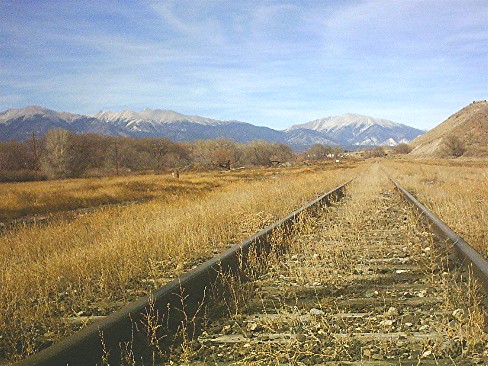
Following the River


Following the River, Copyright by White Feather

Image Copyright © 2007, 2008, by White Feather. All Rights Reserved.

Teen Driving Deaths, Colorado Government & More

Colorado News

Click on headline for full article
Young Drivers' Fatalities in Colorado Dropped 34% in '07Denver Post: "The number of Colorado teens killed in car crashes has dropped by more than a third, but deaths could be even lower if more teenagers buckled up, authorities say."
Report: Colorado Government Gets C+
"The Pew Center on the States released the report Monday, ranking states based on how well they manage their budgets, staffs, infrastructure and information. Colorado received a "C+" overall. The center complemented the state for passing Referendum C, which helps provide more funding for higher education by allowing the state to keep tax surpluses for five years."
Colorado Ski Resort Dispute Starts Over
"WOLF CREEK PASS, Colorado — It’s now official. Environmental groups, including Colorado Wild, have dropped their lawsuit against the U.S. Forest Service, which has agreed to take another stab at its environmental study of a road that would connect a real estate development to the base of the Wolf Creek Ski Area. But whether the Forest Service will draw any different conclusion is the key question. A press conference called by the U.S. Forest Service suggested it won’t."
Costs, Prison Population Going Up in Colorado
"A new report by the Pew Center on the States' Public Safety Performance Project finds that the prison population in this country has crossed a sobering threshold, including here in Colorado. The report shows more than 1 in 100 adults in America are behind bars–and details what that is costing state taxpayers. Last year Colorado taxpayers footed a bill of $599 million to incarcerate 23 thousand people..."
Medicaid Reduction Would Hit State Hard
"Colorado will lose $787 million in health care funds for low-income people during the next five years if proposed Bush administration cuts to Medicaid take effect, according to a new congressional report."


AddThis Social Bookmark Button

Government and Luck

Quotation of the Week

"A little government and a little luck are necessary in life, but only a fool trusts either of them" - P. J. O'Rourke

Tomatoes: Harvesting History and Health

by Annette Welsford

Tomatoes


Spaghetti sauce, ketchup, salsa, and soup--none would be the same without tomatoes. It is hard to imagine a life devoid of this delectable fruit. Fruit? Tomatoes are the reproductive part of the tomato plant, so botanically speaking they are fruits. However, for horticultural and culinary purposes, tomatoes are vegetables because they are most often used in savory dishes. Tomatoes were not always so popular, though. They had a rough history from the mountains of Peru to our dining room tables.

Tomatoes in History: Tomato plants originated in the "New World," or western hemisphere. Most likely originating in Peru, tomatoes were domesticated into the plants we know today in Central America. Hundreds of years of cultivation changed a weedy, seemingly useless plant into a prolific producer of tasty fruit.

Brought to the Mediterranean regions by Spanish Conquistadors, and used widely for centuries, it took much longer for Europeans to embrace the tomato. Tomatoes are part of the plant family "Solanaceae," the potato family. Eggplants, potatoes and tomatoes all share the same genes. The potato family is also the family of deadly nightshade, which contributed to long-held beliefs that tomatoes were poisonous. Tomato plants are similar in appearance to Nightshade plants. Folkloric beliefs relayed that witches used nightshade plants to summon werewolves. The common name for tomatoes was "wolf peach." Linnaeus, upon adopting and applying the modern day system of bionomial nomenclature, named the tomato Lycopersicon esculentum, which translates as "edible wolf peach."

Tomatoes were not widely accepted, cultivated and eaten in European and North American countries until the mid-nineteenth century, when the myth of tomatoes as quick avenues to poisoning were put to rest. In the United States, tomato cultivation took off in 1820, when Colonel Robert Johnson ate a basket full of tomatoes in a public square to put to rest rumors of tomatoes' ill effects. During this time, most people still grew their own vegetables, and eagerly began growing tomatoes in their garden plots. These 19th Century garden plots are where the heirloom varieties of tomatoes, so treasured today, were cultivated, differentiated, and preserved.

Health Benefits of Tomatoes: Once people began growing and harvesting their own tomatoes, there was no stopping the popularity of the vegetable. Tomatoes are great sources of vitamin C and Potassium, each essential nutrients for health. The most celebrated nutrient in tomatoes is Lycopene, the red pigment in tomatoes. Lycopene contributes to health benefits such as reduction in risk of developing many types of cancers. Lutein, another element in tomatoes contributes to health of the retina of the eye, and to heart and vascular health.

Tomatoes are tremendously versatile, and can be eaten cooked or raw, whole or pureed, in salsas, soups, sauces, and in salads. Health benefits are best realized when tomatoes are cooked with a bit of healthy oil. Cooking helps break the cell walls of the plant, releasing nutrients. Healthy oils such as olive oil aid in absorption of vitamins and nutrients in tomatoes.

From their scraggly, weedy and dubious beginnings, tomatoes have become a staple in cultures all over the world. Prized for their flavor and their health benefits, tomatoes are a fixture of modern cuisine.

Annette Welsford is author and publisher of "How To Grow Juicy Tasty Tomatoes." For more information, and to purchase the book, visit bestjuicytomatoes.com.


Logo Creative Homepage Banner

Astrology Forecast for March 2008 - General Tendencies for All Sun Signs

by Janet (Sparrow) Moon

After all the changes we have been through the past few weeks with Mars turning direct, Mercury's retrograde, a solar eclipse, and a total lunar eclipse, March will be a time to coast and enjoy all the new things in our lives. Jupiter will be moving to sextile Uranus this month, and that may inspire us to work harder or even volunteer to help others. It will definitely encourage us to reconsider what it is we value.

March will begin very quietly with no major aspects for the first 5 days. Around Wednesday, March 5th, we will be feeling the influence of the Sun introducing the Jupiter and Uranus duet. That will bring optimism and charisma to many of us through the end of the week. But, at the same time Mars will be debating with Pluto, and that can mean fights. Pluto can bring out the criminal, but with both planets at 0 degrees, it will probably bring out the hero too. Just remember you are not Super Man (or Super Woman), so think before you go on the offense or the defense. Mercury and Neptune will also be at an opposition on Sunday, March 9th, so guard against drinking too much over the weekend. You don't want to be a drunken hero.

The blessings will begin as Venus enters Pisces on March 12th with Mercury right behind her. And, dear Pluto, will be winking at them from across the zodiac as they begin their new adventure. And, the blessings are going to continue for the next 6 days. Venus, Mercury, and Pluto will encourage us to take a more spiritual look at ourselves and our environments. We may find a renewed connection with our Higher Power. Also Mars and Saturn will be shaking hands, and that will bring stamina, determination, and even tempers through Saturday, March 15th.

First Venus and then Mercury will move to compliment Mars-Saturn duet from Saturday through Tuesday, March 18th. This could bring a few minor problems with authority figures (including Dad), or we may find ourselves dealing with financial restrictions or verbal abuse. But, we are also going to feel very strong and capable and we will ready to put some of our beliefs into action.

Pluto will be at a square to the Full Moon on Good Friday, March 21st, and we will probably begin to feel it by Wednesday, March 19th. Squares are "bad," and the Full Moon has a tendency to cause some of us to go a bit out of balance anyway. There could be a lot of jealousy and arguments erupting, and with the Full Moon in Libra, and it will probably hit our relationships. Be gentle, be kind, and think before you act.

We will be much more pleasant on Easter Sunday with Mercury and Venus holding hands through Monday, and as we move to the end of the week Jupiter and Uranus will hit the peak of their connection with Mercury and Venus there to accompany them. The artistic impulses will abound, and we will be inspired to communicate and celebrate our differences all the way through Friday, March 28th.

The weekend of March 29th could leave us feeling a little crabby, and there could be some fights with the Sun and Mars in conflict. But, the last day of the month, Monday, March 31st, could leave us with a new perspective and a new attitude.

April 2008 looks much more exciting, so enjoy the peace that March will generate. The arguments and conflicts will return next month.

Janet (Sparrow) Moon is a professional psychic and astrologer. You can visit her web site for more articles about upcoming events in astrology, and to read her daily astrology general tendencies forecast. (This article can be reprinted freely online, as long as the entire article and this bio are included.) sparrowmoon.com


AddThis Social Bookmark Button

Colorado Lynx, Tamarisk, and a Big Pipeline

Colorado News

Click on headline for full article
Local Lynx Survival In Doubt
The Durango Herald: "Federal wildlife officials will not designate land in Colorado as critical habitat for lynx, citing concerns about the long-term sustainability of the elusive, tuft-eared cat. The agency left Colorado out of its recent proposal to designate more than 40,000 square miles in six states as critical lynx habitat, despite the ongoing success of Colorado's eight-year-old reintroduction program. The agency's main concern was the decreasing number of litters born in the wild."
Invasive Tamarisk Takes Over Colorado Basin
PUEBLO, Colo. -- Nearly 70 percent of Colorado land taken over by tamarisk is in the Arkansas River Basin, a recently completed mapping project reveals. Right now, tamarisk is covering about one-third of the acreage where it has been found, but it likely will choke out other plants until it is the only vegetation in the area. The leaves of the plant provide little nutrition to wildlife and the plants leach large quantities of salt from the soil into the water. Unlike native cottonwood trees, the plants also spread to upland areas.
Colorado Springs Gets Support To Build Massive Pipeline From Pueblo
The debate continues over a billion dollar pipeline project affecting every community from Pueblo to Colorado Springs. The Bureau of Reclamation announced Friday it supports building the pipeline from the Pueblo reservoir straight north to the east side of Colorado Springs. This announcement is a victory for leaders in Colorado Springs, but it's not the plan the Sierra Club liked.


AddThis Social Bookmark Button

Scrunch of Snow Underfoot

by White Feather

Walking the land, you are in touch with the planetary heartbeat. The more you walk, the more in synch you become. You begin to see the subtle earth energies at work. They are right there but you never noticed before.

Walking is rhythmic. All drumbeats are auditory reflections of the planetary heartbeat.

You can walk the same mile two hundred times and you will experience at least two hundred new things; something new each time.

One walk could intersect another walk you did twenty-four years ago even though you are now in a completely different place. Earth energy lines intersect all over the place; both in the physical and the non-physical. Every line somehow connects to all others. And all roads lead to Home.

When you walk the very same mile one hundred thirty-seven times and then when you walk it the one hundred thirty-eighth time and you do so while that mile is under two feet of snow, it's like taking a walk in a different dimension. It's intensely different.

There are so many dimensions right here. We never have to travel. But walking acts to turn the kaleidoscope. It is the turning of the pages that allows the story to unfold.

When you walk and as your feet pad upon the planetary Mother's skin, you are in a very creative state. Walking into the infinite field of possibilities, each step we take is an interdimensional birth.

When we walk we are engaging the NOW in all its many dimensions. When we walk we are engaging our selves and our own many dimensions. When we walk in joy and awe our bodies respond with the production of life hormones. With each mile our bodies become more balanced and playful. With each mile we see more--even if it is the same mile.

We could say every mile takes us closer to Home. Or we could say that we bring Home with us with each new step. We could also say that everything we see as we walk our walk is a new and different reflection or perspective of Home. Or we could say Home is everywhere we walk.

Walking is like pages of a book. If it's a book you've got to read but are not enjoying much you read quickly, often skimming, and the pages are turning rapidly. It it's a book you are thoroughly enjoying you savor every word and the pages turn much more slowly. How quickly do you walk?

Isn't it amazing how ten inches of snow cannot keep us separated from the planet but six inches of rubber can?

Isn't it amazing how the white of the nighttime snow perfectly reflects the white of the nighttime clouds? And our breath is the same color. And so is the moon.

The clouds and our breath and the moon, however, do not scrunch underfoot like the snow does. Wouldn't it be great to take a walk through a cloud to see what kind of sound it makes?

Copyright © 2006, 2008, by White Feather. All Rights Reserved.
In addition to occasionally writing for Blog Salida, Salida author White Feather has published numerous books, including two novels, collections of short stories, and collections of non-fiction essays. Check out White Feather's books here.


AddThis Social Bookmark Button